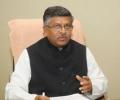
Ravi Shankar Prasad in a review meeting of MTNL earlier this month had pulled up officials for poor network quality and slow pace of network roll-out.

Chinese telecom gear giant Huawei Technologies has sought permission for access to the government's 'Trusted Telecom Portal' which went live on June 15 so that it can share details about the telecom products which telecom service providers have agreed to buy from it. The move is significant as sources close to the development say that, according to Chinese telecom companies' interpretation, the new National Security Directive on the telecom sector does not in any way prohibit them from participating in the process of selling telecom equipment of any kind to private telcos. The firm is waiting for a response from the government. It declined to comment.

Bharti Airtel is counting on its "endearing" brand to build on its acquisition of Zain Telecom's African operations. In addition, it aims to do what Indian companies are getting increasingly known for: Reduce costs.

The Supreme Court on Friday dismissed the applications filed by telecom majors, including Vodafone Idea and Bharti Airtel, seeking rectification of the alleged errors in calculation of Adjusted Gross Revenue (AGR) related dues payable by them. "All the miscellaneous applications are dismissed," a bench headed by Justice L Nageswara Rao said while pronouncing the order. The telecom companies had submitted before the apex court that arithmetical errors in the calculation be rectified and there are cases of duplication of entries.
A rare bonhomie among three private telecom companies in raising tariffs coming on the back of a bailout package by the government may have helped the telecom sector avert a crisis but the challenges haven't ceased to exist as the industry faces a cash-guzzling task of rolling out 5G networks in the coming months. The sector that provides direct and indirect employment to millions is projected to see Rs 1.3 lakh crore to Rs 2.3 lakh crore of investments in the coming years in creating robust infrastructure and building telecom and network products that have been incentivised by the government through PLI and other initiatives. After years of cut-throat competition and the apex court ruling on payment of past statutory dues left some players in the lurch, billionaire Sunil Mittal's Bharti Airtel and struggling Vodafone Idea almost in tandem raised tariffs, taking the plunge they had long been talking about.

'Especially if their investment horizon is over two years.'

With the hotting up of the telecom and broadcasting sector due to entry of more and more players, legal disputes in the field are bound to increase, Justice Santosh Hegde, who took over as chairperson of TDSAT, said on Monday.
Communication and IT Minister Dayanidhi Maran on Tuesday showered words of praise on Pradip Baijal, chairman, Telecom Regulatory Authority of India saying he has done a great job, especially in reducing telecom tariffs.

The impending merger between Housing Development Finance Corporation (HDFC) with HDFC Bank may create challenges for large-cap fund managers, most of whom are already grappling to match the returns generated by their benchmarks. The combined weight following the merger in the benchmark Sensex and Nifty 50 indices is likely to be much higher than permissible limits for active mutual fund (MF) schemes. This could have a bearing on the performance of large-cap funds if HDFC Bank shares outperform the markets, as the schemes will be forced to remain underweight on the stock to adhere to the single-stock cap.

Prime Minister Narendra Modi's call to make this decade a "techade" for India and the push for 5G, semiconductors and transformation through digital services is going to boost the technology sector in the country, industry players said on Monday. Modi, in his speech on the 76th Independence Day, touched upon all-round development of technology in the country, from 5G to push for electronic chips, laying of optical fibre cable (OFC) network across villages and enablement of digital entrepreneurship in villages through Common Services Centres, making the present decade as "techade" for India. Homegrown mobile devices maker Lava International's Chairman and Managing Director Hari Om Rai said electronics and technology sectors create about $4 trillion of revenue.
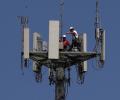
While the government has not barred procurement of equipment from Chinese companies, the process to amend the general financial rules (GFR) 2017 has started. This will impose restrictions on bidders in public procurement from countries that share a land border with India, reports Megha Manchanda.

With the Nifty50 just about 3 per cent away from its all-time closing high of 18,812 points, analysts at BofA Securities suggest investors book profit. Their reasons for the advice include risks like the possibility of a cut in corporate earnings growth forecasts, high valuation (one-year forward P/E of 19.5x), interest rates staying elevated for longer-than-expected and credit tightening. Going ahead, they expect the Nifty50 index to drop to 16,000 levels - down nearly 12 per cent from the current level of 18,255 points, which they believe would be a good time to buy.

Investors seem to be shying away from stocks of companies in the 'digital' space with most counters that comprise the Nifty India Digital index giving negative returns over the past year. The index tracks the performance of a portfolio of stocks that broadly represent the 'digital theme' within basic industries, such as software, e-commerce, IT-enabled services, industrial electronics, and telecom services. The fall in some of these stocks over the past year has been steep; the sharpest decline of around 60 per cent was seen in shares of PB Fintech (parent company of Policybazaar).

It came as a surprise to all stakeholders - competing telecom companies (telcos), most analysts and even the government's internal projections on revenues from the 5G auctions. Reliance Jio disrupted all calculations by paying a stiff Rs 40,000 crore to buy 10 MHz of spectrum in the 700-MHz band, globally considered a key band for efficient 5G service coverage, along with the default 3.5 GHz band and the ultra-high speed and low-latency millimetre band of 26 GHz band. So what made Jio pay almost 45 per cent of its total spend in this auction for the 700 MHz band - much more than what it rustled up even for the 3.5 GHz band?

Finnish telecom gear maker Nokia and Tech Mahindra have joined hands to deploy 5G-based solutions for business organisations, according to a joint statement by the two companies. Under the collaboration, Tech Mahindra will leverage Nokia's private wireless DAC (digital automation cloud) solution for customers across industries and facilitate in automating 5G private wireless network management on a cloud computing system and enabling them deploy internet of things like technology.

Modi said this 'special invitation' from President Joseph Biden and First Lady Jill Biden for a state visit is a reflection of the vigour and vitality of the partnership between the democracies.

Equity benchmarks began the week on a downbeat note on Monday, weighed by heavy selling in market heavyweight Reliance Industries and persisting weakness in global bourses. The rupee plunged to its lifetime low against the US dollar amid unabated foreign fund outflows, underscoring the risk-off sentiment prevailing globally as central banks embark on policy tightening to tame soaring inflation. Slipping for the second straight session, the 30-share BSE Sensex shed 364.91 points or 0.67 per cent to close at 54,470.67.
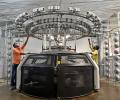
Manufacturing companies have been outperformers on the bourses in the current year, leading to a rise in their weighting in the benchmark index. Companies in sectors such as FMCG, automobile, pharmaceuticals, metals, cement, and agrochemicals now account for 25.43 per cent of the Nifty 50 index, up 88 basis points from 24.55 per cent at the end of December last year and a record low of 23.1 per cent at the end of CY20. The manufacturing sector is now dominated by FMCG majors such as Hindustan Unilever, ITC, Asian Paints, Nestle, and Britannia, accounting for 45 per cent of the combined market cap of all manufacturing companies in the index.
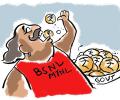
The Centre is considering relaxing some norms that led to the failure in attracting bids for assets of Bharat Sanchar Nigam (BSNL) and Mahanagar Telephone Nigam (MTNL) as they look to restart the auction for their non-core assets. The Department of Investment and Public Asset Management (DIPAM) had listed six properties of BSNL and MTNL for sale through its new e-bidding portal, developed by state-run MSTC, but the auction failed to garner an adequate interest. DIPAM had asked government-appointed property consultants to identify issues in the bidding criteria for resolution.

Tata Communications has elected the private equity (PE) veteran as a successor to Subodh Bhargava.

Equity indices staged a pullback on Tuesday after three days of declines as investors scooped up IT, metal and consumption stocks amid a largely positive trend overseas. A recovery in the rupee added to the momentum, traders said. Overcoming a wobbly start, the 30-share BSE Sensex climbed 274.12 points or 0.45 per cent to settle at 61,418.96.
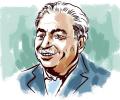
'There is definitely a skill war, or a talent war going on.'

Airtel acquired African telecom operator Zain in 2010 for $10.7 billion.

Equity investors have become poorer by more than Rs 18.74 lakh crore as the market continued to remain bearish for the fifth session on the trot on Thursday. The 30-share BSE Sensex tumbled 1,158.08 points or 2.14 per cent to end below the 53,000-level at 52,930.31 points on Thursday. Markets have been falling for five straight sessions and the BSE benchmark has tumbled 2,771.92 points or 4.97 per cent during this period.
Nokia said it was the first to manufacture the 5G New Radio in India, and it is now producing Nokia AirScale massive Multiple Input Multiple Output solution at the facility.
Telecom operator Bharti Airtel and IT major Tata Consultancy Services (TCS) have joined hands to build a 5G-based remote working technology using robotics, according to a joint statement. TCS during the trials has successfully tested two use cases of its Neural Manufacturing solutions on Airtel's 5G testbed in Manesar - remote robotics operations, and vision-based quality inspection, the statement claimed. "The 5G ecosystem will open limitless possibilities for enterprises to enhance productivity and serve their customers even better with digitally enabled applications.
Reliance Industries Limited on Wednesday became the first Indian company to hit the Rs 19 lakh crore market valuation mark following a rally in its share price. The market heavyweight stock jumped 1.85 per cent to its record high of Rs 2,827.10 on the BSE. Following the gain in the share price, the company's market valuation jumped to Rs 19,12,814 crore in morning trade on the BSE.
Saswat Chakraborti, head of G S Sanyal School of Telecommunications at IIT-KGP says: "We offered three short-term courses so far in 2007, and would introduce one more this December. We are planning several new courses targeted at B-tech graduates, industry professionals, as well as teachers from engineering institutes."

The early bird results for the January-March quarter of 2022-23 (Q4FY23) show a pick-up in earnings growth, despite a slowdown in revenue growth, thanks to a decline in input costs and lower provisioning for bad loans by banks. The combined net profit of 66 companies that have, so far, declared their quarterly results was up 15.2 per cent year-on-year (YoY) in Q4FY23, an improvement from 4.3 per cent YoY growth in Q3. Net sales growth of these companies, however, slowed down to 11.5 per cent YoY in January-March 2023, the slowest rate in eight quarters.

Sensex ends 134.91 pts down at 28,709.87; Nifty falls 44.70 pts at 8,712.05.

Sliding for the fourth straight day, the BSE Sensex shed 152 points in choppy trade on Wednesday amid mixed global cues ahead of the US Federal Reserve's policy decision.
Telecom technology firm Qualcomm on Monday announced the appointment of Kanwalinder Singh as the president of Qualcomm India.

How dominant are Chinese firms in India's sub-Rs 10,000 mobile device market? The question has become relevant as the government has been thinking of reserving this price segment for domestic players who have not been able to battle the Chinese onslaught. However, telecom firms and others are concerned that such a move could stymie the effort to build affordable 5G phones in the sub-Rs 10,000 category.
Dr Murali Manohar Joshi, chairman of the Public Accounts Committee, told newsmen that the claim made by Kapil Sibal, who holds temporary charge of telecom ministry was contradicted by Central Bureau of Investigation director A P Singh, who appeared before the committee in Parliament.

Equity indices made an emphatic comeback on Friday after falling for seven straight sessions after the RBI hiked interest rates by 50 basis points on expected lines and projected inflation coming under control from January next year. A strong recovery in the rupee added to the momentum, traders said. Overcoming a wobbly start, the 30-share BSE Sensex soared 1,016.96 points or 1.80 per cent to settle at 57,426.92. During the day, it rallied 1,312.67 points or 2.32 per cent to 57,722.63.

Adani Enterprises' proposed Rs 20,000 crore (Rs 200 billion) fundraising via fresh issue of equity shares through a public offer would be the fourth biggest by Indian companies, excluding banks and non-banking financial companies.

Global markets trends, inflation, release of industrial output data and quarterly earnings will dictate movement of the equity benchmarks this week, analysts said, adding that volatility might continue amid slew of announcements of macroeconomic data at the global level too. Moreover, foreign fund movement, crude oil prices and trend in rupee would also act as major drivers for the equity market, they added. "The direction of global equity markets along with movement in dollar index and crude oil prices will continue to dominate while inflation numbers of the USA on May 11 and inflation and IIP numbers of India on May 12 will also cause volatility in the market," said Santosh Meena, head of research, Swastika Investmart Ltd.

Disney-Star is positioning IPL as a "big-screen experience" where families and friends can come together over a game of cricket, much the way football is consumed in Europe and other parts of the world.

5G ambulances will not just allow remote consultation, but would also be able to transit data and video to hospitals in real time, saving precious time for critical patients. 5G technology would also support the development of new educational applications, improve agriculture productivity, and aid search and rescue missions with high resolution cameras in disaster recovery zones.
